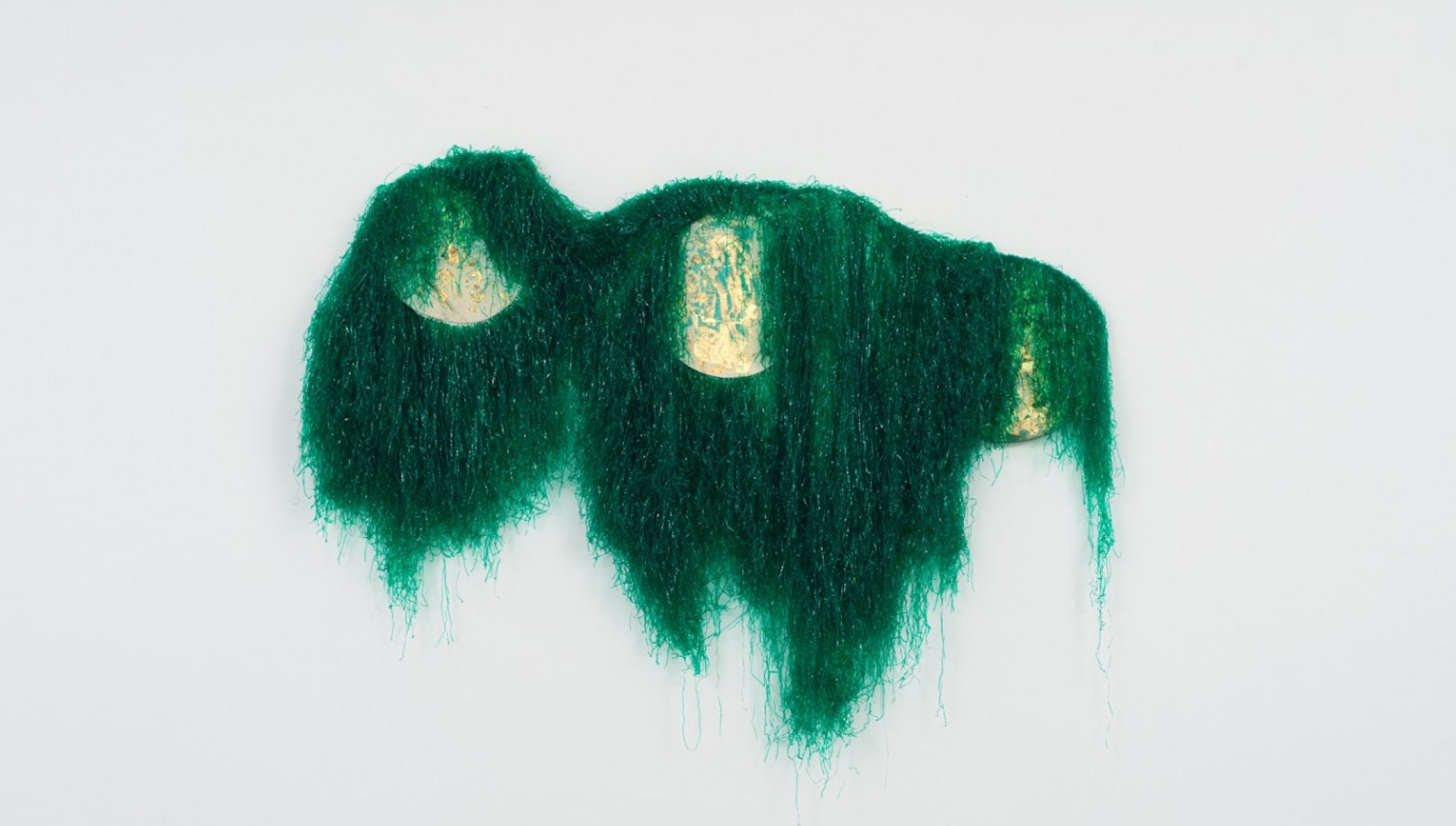
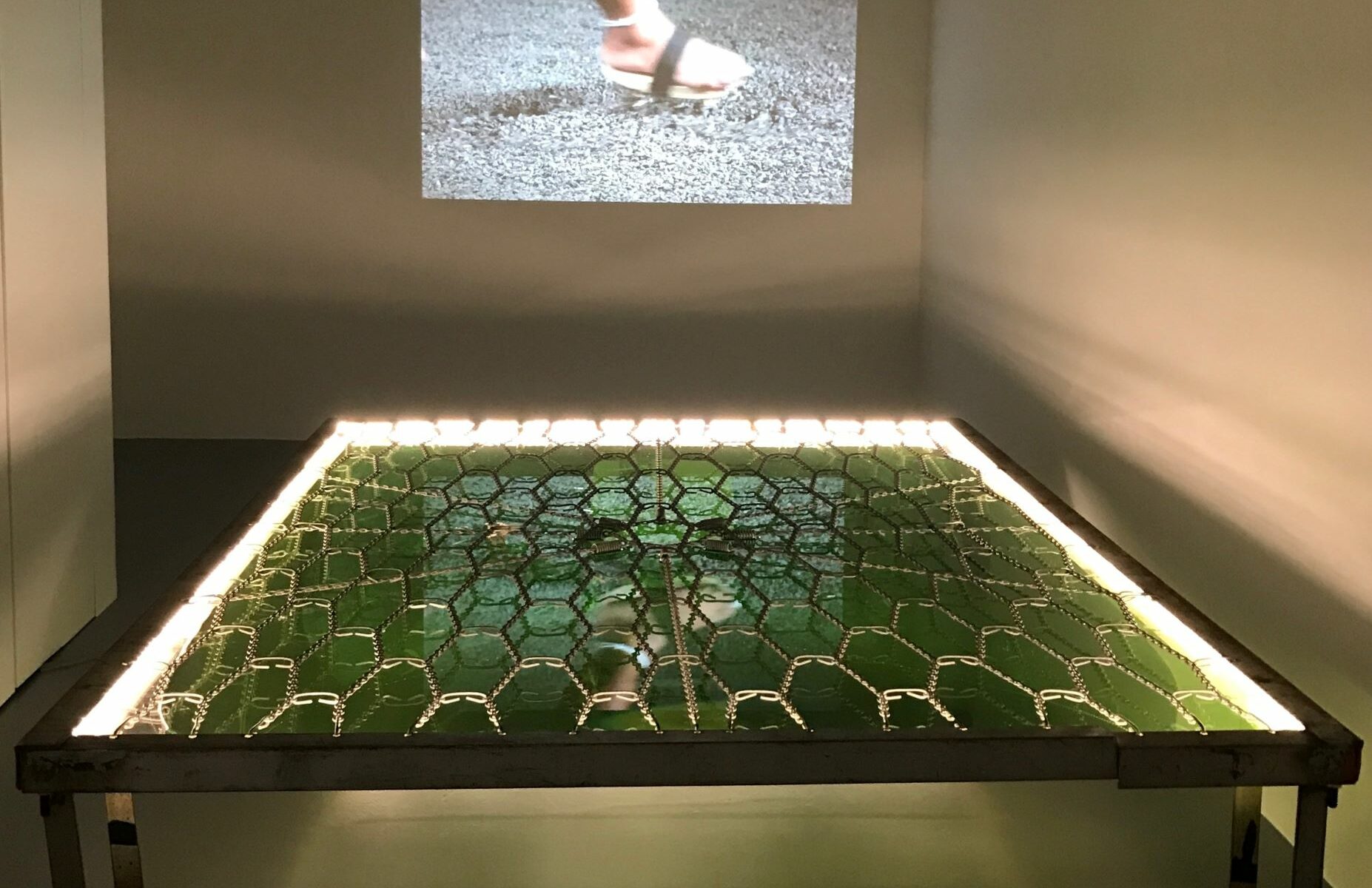
The rectangular shape of the bedframe doubles as the archetypal shape of the swimming pool, while the green glow of the LED lights suggests the lit, shimmery pool at night, a vision of luxury and indulgence. A quintessential marker of privilege found in the exclusive, white South African suburbs, the pool is often glimpsed behind high fences topped with broken glass and surrounded by manicured lawns that have inspired another of Gqunta’s work, Lawn (2016/7). The broken Coca Cola bottles of Lawn, used to protect properties from intruders, connote the reach of global capitalism as well as the makeshift petrol bombs used in protests in South Africa’s townships, at the other end of the social and racial divide.
Interrogating the legacies of apartheid
Lungiswa Gqunta creates performance art, sculpture, and multisensory installations that interrogate the legacies of Apartheid and colonialism. Her practice often incorporates common and found objects — salvaged bed frames and discarded bottles — alongside more overt signifiers of violence and exclusion, such as barbed wire.
Gqunta’s political sensibility infuses even the most mundane and domestic things with incendiary potential, as in the brushes equipped with matches instead of bristles shown in the 2018 exhibition Qwitha at WHATIFTHEWORLD gallery in Cape Town. The brushes appeared in the video Feet Under Fire, where the artist’s legs are shown walking in scrubbing brushes instead of shoes, and in a wall sculpture. Used to polish the stoep or entrance steps/porch of Cape houses, the matchstick brushes combine intimacy and insurrection, violence and domesticity .
Despite its seemingly serene name, Sleeping Pools, another work featured in Qwitha, partakes of the same incendiary spirit. The sculpture was made in an edition of 3, with two additional artist’s proofs, of which this work is one. Like Lawn, Sleeping Pool brings together in a tense and combustive relation the suburb and the township. Petrol makes a disquieting reappearance in Sleeping Pools as a substitute for water. Both works are precarious containers of an unsettling green that is soothing and toxic by turns. The play on pool/bed brings the tension home, at the heart of domesticity and of post Apartheid South African society. The title suggests a collective sleep, a surface oblivion of conflict lurking in the depths. Perhaps the incendiary smell of petrol will serve as a wakeup call: “Our house, as in our whole country, is on fire, and who is gonna put it out? We have to collectively come together to put it out, as Black people. Not even just South Africans, but the entire continent.”
Smell
Smell is important to Gqunta’s social and political practice, nudging the viewer beyond the passive visual consumption of the work toward a full-body experience that is intellectual and emotional. Contemporary art often incorporates senses beyond vision, with the olfactory component in recent resurgence. Smell assails us, entering our body, conjuring up memories, inciting calm, or unease. It is a sense “mired in paradox,” seemingly immediate yet culturally inflected. The exhibition of Sleeping Pools in Qwitha posed a challenge to the visitors—the intrusive smell of petrol winnowing out those visitors who chose to remain in the presence of the work, despite being assailed by the strong fumes, from those who gravitated outside for socializing and a respite from the overpowering smell.
Having grown up in one of the largest townships of South Africa, the artist is preoccupied with accessibility and the freedom of movement. She is troubled by the fact that her work is shown in places where her community, her people, are not able to see or engage with it. Sleeping Pools calls on its viewers to stay with the experience of discomfort. Later, when they go home, they carry the smell of petrol on their clothes, a bit of the experience of the work follows them home.