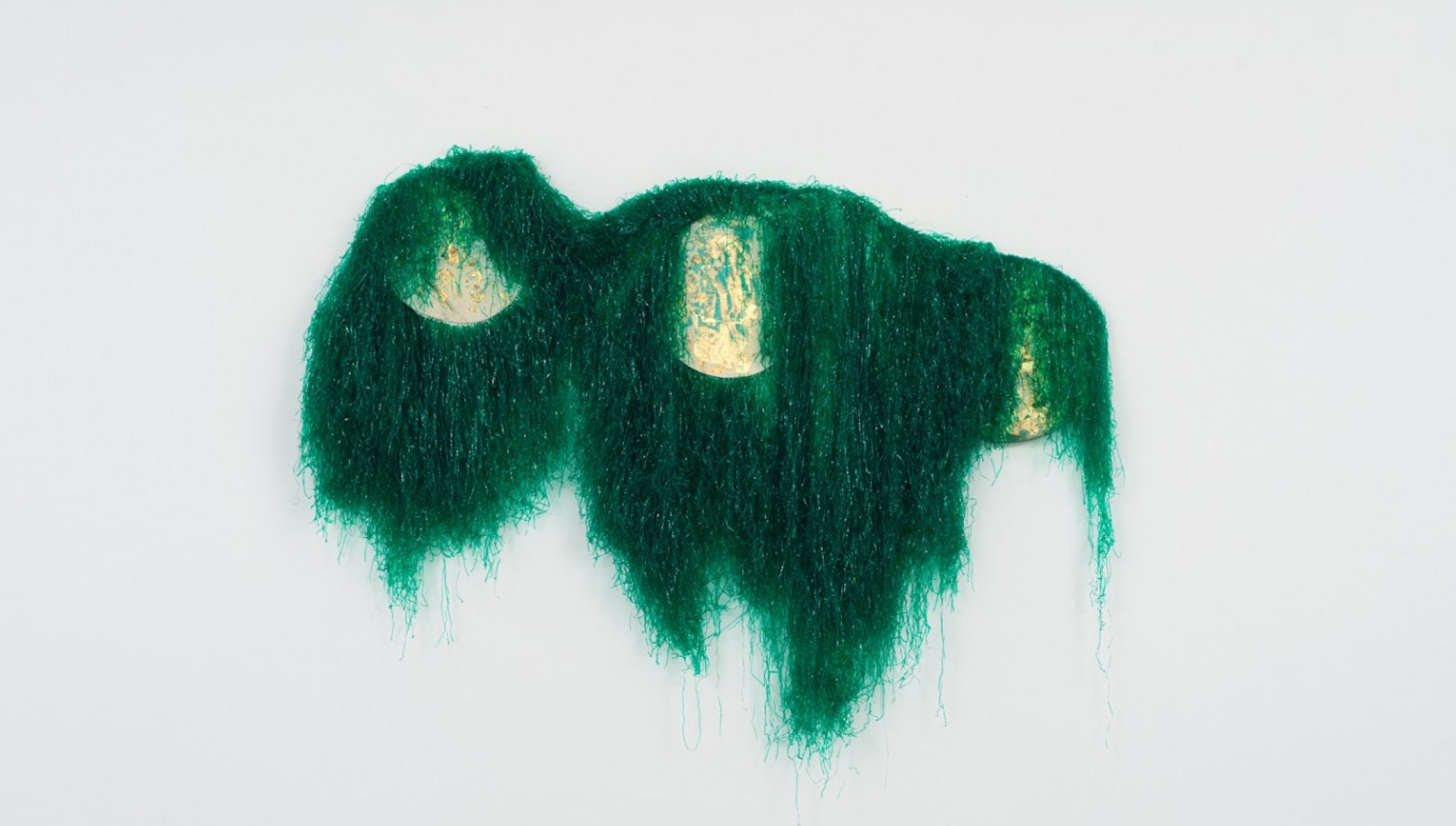
In the 1970s, the humanist geographer Yi Fu Tuan speculated that “in some ideal future, our loyalty will be given only to the home region of intimate memories and, at the other end of the scale, to the whole earth.” Half a century later, Energiesat the Swiss Institute adopts Tuan’s dual vision while dispelling any notion of an ideal attained. Instead, the show’s hyperlocal roots and global reach offer a trenchant critique of the power relations that inhere in the act of generating energy. The spark is a story of grassroots activism set in the 1970s East Village.
From the ravaged cityscape of the 1973 oil crisis sprang the first sweat equity co-op at 519 E 11th Street. On the roof, residents installed a two-kilowatt wind turbine paired with solar panels that supplied the community with electricity as it experienced frequent outages. Energies includes archival documents and works by Becky Howland and Gordon Matta-Clark, who were involved in local regeneration projects in the 1970s: Howland’s sculpture “Oil Tankers on Fire” (1983/1996/2024) and Matta-Clark’s Energy Trees (1972–73) drawing series. It also brings a contemporary lens to questions of energy justice through a sharply curated artist cohort.
Installation view of Energies at the Swiss Institute, New York. Left: Liu Chuang, “Untitled (The Festival)” (2011), single-channel video (color, sound), 5:14 min.; right: Saba Khan, “Indus Water Machine (number 3)” (2020), console, headphones, fixed LCD TV, plastic hook, USB, MP3 player, glass cube with lid, and LED strip light (image courtesy the Swiss Institute)
The show radiates into the neighborhood with a nearby mural by Otobong Nkanga (whose current monumental installation at MoMA is a must-visit) and a recreation of Matta-Clark’s rosebush enclosure at St. Mark’s Church. Inside the Swiss Institute, its three floors are replete with works that collectively attain planetary scope through quirky means: Vibeke Mascini’s installation powered by cocaine confiscated in the port of Rotterdam; Saba Khan’s retro-futuristic sculpture referencing World Bank-funded hydropower projects on the Indus River; Joar Nango’s structure made of wood, reindeer sinew, and the aforementioned halibut stomachs, used in Sámi architecture for their transparent and insulating properties; and Cannupa Hanska Luger’s mirror shields devised for water protectors of the Standing Rock Reservation.
The artworks are modest in size yet ambitious in concept, begging the question: How impactful are cerebral, historically informed interventions, in a perilous time for environmental safeguards? The exhibition’s origin story suggests an answer — the residents who erected the wind turbine were sued by the near-monopolistic Con Edison company for forcing it to buy back their surplus energy. With the unlikely support of a former Attorney General, William Ramsey Clark, they prevailed, opening a path for decentralized power production in the United States and, like the show that they inspired, planting hope in the rippling wake of small local acts.
Ximena Garrido-Lecca, “Yacimientos” (2013), 2-channel HD video, 10:45 min. (courtesy of the artist)
Installation view of Energies at the Swiss Institute, New York (courtesy the Swiss Institute)
Jean Katambayi Mukendi, (left to right on wall) “Afrolyte” (2021), “Covid Afrolamp 23 00h” (2022), “Energie” (2022), “Trust” (2021), all pen on paper; (on pedestal) “Truck” (2023), copper and steel wire (all courtesy Ramiken Gallery)
Vibeke Mascini, “Instar (3.9 kWh)” (2024), electricity generated from burning confiscated cocaine and crystal meth, lithium batteries, transformer, battery management system, timer, electric nebulizer, borosilicate glass reservoir, and dissolved floral ozone (courtesy of the artist)
Installation view of Energies at the Swiss Institute, New York (courtesy the Swiss Institute)
This review appeared in Hyperallergic on December 19, 2024.
Penny Siopis, the South African artist of Greek descent, should be a household name in contemporary art. Through a major retrospective that spans five decades of painting, video, sculpture, and installation, the National Museum of Contemporary Art in Athens (EMST) makes exactly that proposition. For Dear Life, curated by Katerina Gregos, is Siopis’s first such show in Europe. Works of breathtaking breadth and depth explore violence, memory, and what the artist has called “the poetics of vulnerability” in media ranging from oil paint and glue to ephemera and found film, spanning the intimate to the monumental.
True to its ambition, the retrospective includes work from each of Siopis’s major series, demonstrating the artist’s risk-taking and ever-evolving process. Formally disparate works are tied together by sensory and conceptual threads — with an emphasis on materiality and the interweaving of personal and public histories — that make her entire oeuvre far more than the sum of its parts.
Installation view of Penny Siopis: For Dear Life at the National Museum of Contemporary Art, Athens. Pictured: Cake series (1982) (photo Paris Tavitian)
Siopis first garnered attention for her Cake paintings (1980–84), rooted in her early experiences in the family bakery in Vryburg. These feed on cakes as symbols of celebration and commemoration, but also on their ephemerality: elaborate confections are destined to grow stale or be devoured, suggesting the intimate horror of aging and decay. Everywhere in her work, private and public histories are entangled. Growing up in the 1950s and ’60s, Siopis has described the bakery as a charmed space interrupted by the reality of apartheid. In the catalog Penny Siopis: Time and Again she recalls the day when one of the Black workers arrived at the family’s doorstep bleeding from an act of racial violence as “a traumatic moment in a kind of idyll.”
Penny Siopis, “Melancholia” (1986), oil on canvas, ∼77 3/4 x 69 inches (197.5 x 175.5 cm); Johannesburg Art Gallery (image courtesy National Museum of Contemporary Art, Athens)
Very different in style are the History paintings (1985–95), whose baroque excess draws on European traditions of allegory. History painting, long considered the most elevated genre of classical European art, was originally unavailable to women, who were steered instead toward still life and domestic themes. “Melancholia” (1986) offers an ironic take on this legacy of exclusion by pairing classical sculpture with food and flowers: an orgy of consumption that doubles as a critique of Western ideological and extractive sprawl. Another important work, for its provocative medium and theme in 1980s apartheid South Africa, is “Patience on a Monument: ‘A History Painting’” (1988). Siopis combines a collage of racist images from school textbooks with a thick impasto, conveying in both form and matter the banal dissemination of colonial ideology as a catastrophe of meaning, edging out truth by filling the mental and pictorial horizon to the brim. A Black Patience figure seated at the center recalls cultural critic Walter Benjamin’s reading of Paul Klee’s “Angelus Novus“: the angel of history whose face is turned toward the past experienced as an ever-mounting pile of ruins. She is quietly peeling a lemon. This generative intermingling of mundane and rarefied references is a signature of Siopis’s style and key to its layered signification.
So is innovation born of Siopis’s idiosyncratic collecting, shown in her video works (1994–2021). The artist spliced together home movies found in flea markets with her mother’s family footage and added soundtrack and captions. “My Lovely Day” (1997) draws on her grandmother’s exilic stories of the Greek-Turkish population exchange and Siopis’s own diasporic identity to draw parallels between Greek and South African political violence and trauma.
The halting, ghostly assemblages bear witness to larger narratives, from the unlikely assassination of the architect of apartheid, H.F. Verwoerd, by the Greek Mozambican migrant Demetrios Tsafendas in “Obscure White Messenger” (2010) to the quiet epidemic of domestic violence running alongside COVID in “Shadow Shame Again” (2021). Historical narrative is stitched together from the contingent, flawed visual archives of strangers and embroidered with the pathos of transience and loss.
The same aesthetic of the assemblage assumes a radically different form in Siopis’s installations, Charmed Lives (1998–99) and Will (1997–ongoing). In these still-growing, ever-morphing accretions of personal, found, and gifted objects — some of which are destined to be dispersed among the artist’s friends upon her death — human itineraries are charted through the social lives of things.
Penny Siopis, “Charmed Lives” (1998–99), three panels, ∼78 3/4 x 59 x 20 inches (200 x 150 x 50 cm); Collection of the artist (photo Paris Tavitian)
Siopis’s practice draws on many theoretical currents: feminism, anthropology, psychoanalysis, late 20th-century French philosophy. But concept is not allowed to dominate matter or empty it of its tactile, sensuous appeal and, often, horror. Her thick application of paint takes on the texture of food or skin in the Cake series; her melding of figure and ground unsettles the division between abstraction and figuration in the more recent Pinky Pinky series (2002–4). Pinky Pinky is an urban legend in South Africa that speaks to the uncanny cultural and sexual tangle of female adolescence: a half-human, half-animal creature that prowls on prepubescent girls in restrooms. Here, the artist plays with the limits of form at its most visceral, “dragging it to the verge of formlessness,” as she notes. Color and texture that trouble the boundary between skin and flesh, bodies both intact and flayed, or distilled into a single anatomical part with its appendages of teeth or nails, Pinky Pinky embodies materiality outstripping language to convey an unspeakable or nameless dread.
Few artists have such power to make us aware of our dual modes of cognition, cerebral and visceral. Few artists compel the visitor to alternate between the states of perpetrator and sufferer, viewer and viewed, intimacy and exposure.
The exhibition is the flagship event of a year-long cycle, centered on female-identified artists, titled What If Women Ruled the World? A possible answer might be that cultural amnesia about past violence and its ongoing legacies is harder to maintain in the presence of Siopis’s haunting entanglement of the body in history.
Penny Siopis, “Patience on a Monument: ‘A History Painting’” (1988), oil and collage on board, ∼71 x 78 3/4 inches (180 x 200 cm); William Humphreys Art Gallery, South Africa (image courtesy National Museum of Contemporary Art, Athens)
Installation view of Penny Siopis: For Dear Life at the National Museum of Contemporary Art, Athens. Pictured: Pinky Pinky (2002–4) (photo Paris Tavitian)
Create to Free Yourselves—Abraham Lincoln and the History of Freeing Slaves in America, which opened on November 18 at the Smithsonian Museum of African Art, is the culmination of more than two decades of artist Georges Adéagbo’s fascination with the United States president. The exhibition, curated by Karen Milbourne, reinvents at scale an installation by Adéagbo that was shown at Lincoln’s Cottage in DC early in 2023. Its inception goes back decades, to Adéagbo’s original vision for an installation on the steps of the Lincoln Memorial. Its current incarnation was informed by a 2021 fellowship that enabled the artist, born in 1942 in Cotonou, Benin, to research Lincoln and channel the collection of memorabilia — including letters, artifacts, and clothes — located in the Smithsonian Museum of American History into his art.
The exhibition’s location on the National Mall matches the confidence of Adéagbo’s vision of Lincoln. Yet visitors may be surprised and challenged at first by the show’s eclectic materiality. Adéagbo is the artist in the archive, but also acts as collector, explorer, and curator. In his characteristic style, the installation brings together everyday or discarded objects, often sourced from local flea markets, alongside African sculptures and painted tableaux commissioned from artisans in Benin, as well as second-hand books, photographs, vinyl, and even a lost toy recovered from the park that surrounds the museum. The effect is humanizing and lyrical, yet highly conceptual. It brings high and popular culture, global networks and local belonging, the foreign and the familiar, into poetic proximity.
Installation view of Georges Adéagbo’s Create to Free Yourselves: Abraham Lincoln and the History of Freeing Slaves in America at the Smithsonian National Museum of African Art
Most unsettling and poignant is the artist’s communion with Lincoln, across time and within this contained universe of associations. Central to one of the radiating assemblages, which resemble shrines, is an equestrian statue of Lincoln in a top hat, carved in Benin and facing an African sculpture. The objects’ encounter is suffused with the loneliness and pathos of Lincoln’s unfinished life’s work: Adéagbo was inspired by Lincoln’s daily commute from the Soldiers’ Home to the White House in the summer. The itinerant motif subtly recalls the global circulations, often forced and violent, that enslaved millions of people and brought artifacts into Western collections. The artist teases out the exploitative and exhibitionist currents in aesthetic traditions and museum display practices, yet his world-making reclaims the emancipatory values of creative expression, movement, and cross-cultural exchange.
Perhaps most astounding is the way an installation composed of seemingly modest elements conveys the role of Lincoln as a figure of not only American but global significance. It is no accident that Adéagbo has, all along, imagined his intervention as located at the center of the US capital, in the heart of the national narrative. Several years in the making, the exhibition has uncanny timeliness. Adéagbo’s cosmopolitan gaze exposes the parochialism of racist rhetoric, the shamefulness of narrow national interest, the fallacy of ignoring the interconnectedness of past and present, here and elsewhere. And he reclaims the violence of forced and cruel journeys, sublimating them into a sense of freedom and even exuberance: creating to free yourself.
Installation view of Georges Adéagbo’s Create to Free Yourselves: Abraham Lincoln and the History of Freeing Slaves in America at the Smithsonian National Museum of African ArtDetail of Georges Adéagbo’s Create to Free Yourselves: Abraham Lincoln and the History of Freeing Slaves in America at the Smithsonian National Museum of African ArtDetail of Georges Adéagbo’s Create to Free Yourselves: Abraham Lincoln and the History of Freeing Slaves in America at the Smithsonian National Museum of African Art
This review appeared in Hyperallergic in March 2024.